
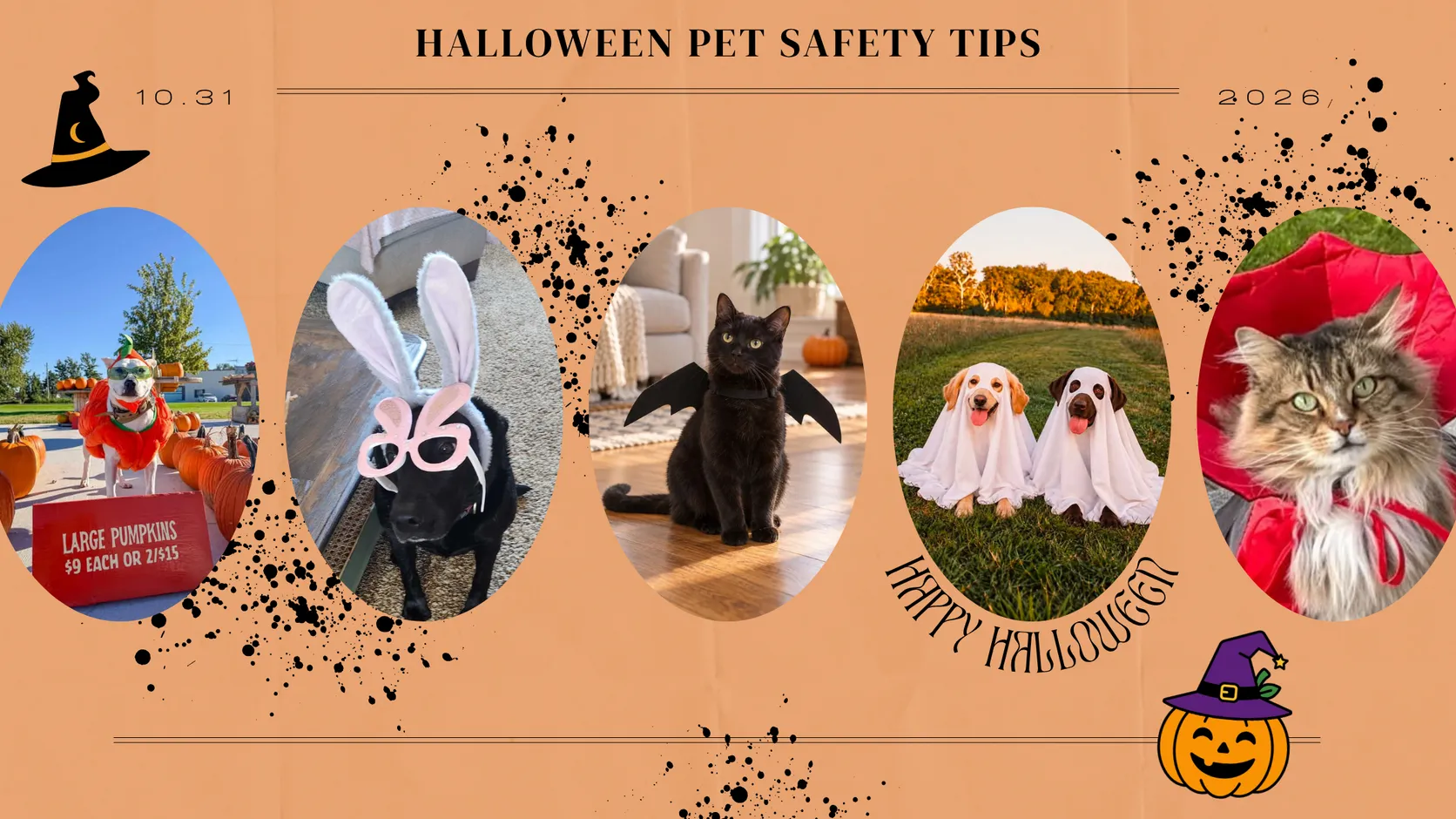
No Tricks, Just Treats! Halloween Safety Tips for Dogs and Cats
Halloween is almost here! Between the costumes, candy, decorations, and trick-or-treaters, there's plenty of excitement to go around. And while we love seeing our four-legged friends get into the spooky spirit, Halloween can bring some unexpected risks for pets.
From curious cats investigating decorations to dogs sniffing out hidden candy, even the most well-behaved pets can find themselves in a little Halloween mischief.
The good news? With a few simple precautions, you can help make Halloween a fun and safe experience for everyone in your household — including those with paws!
1. Keep the Halloween Candy for the Humans
We know those puppy-dog eyes can be hard to resist, especially when you're enjoying a favorite Halloween treat. But some of the goodies we love can be downright dangerous for our pets.
Here are a few treats that should always stay out of reach:
- Chocolate: Chocolate contains theobromine and caffeine, which can be toxic to dogs and cats. Dark chocolate and baking chocolate are particularly dangerous, but all chocolate should be kept away from pets.
- Sugar-Free Candy and Gum: Some sugar-free products contain xylitol (sometimes labeled as birch sugar), an artificial sweetener that can cause dangerously low blood sugar and liver damage in dogs.
- Raisins: Those little boxes of raisins might seem like a healthier Halloween alternative, but grapes and raisins can cause serious kidney damage in dogs.
- Candy Wrappers: Even if the candy itself isn't toxic, wrappers can pose choking hazards or cause intestinal blockages if swallowed.
- High-Fat Treats: Eating large amounts of rich, fatty candy or other foods can cause gastrointestinal upset and may trigger pancreatitis, a potentially serious and painful condition.
Our advice: Keep candy bowls, trick-or-treat bags, and leftover goodies in secure cabinets or other places your pets cannot access. Remember, some dogs are remarkably talented at finding treats they aren't supposed to have!
If you suspect your pet has eaten chocolate, xylitol, raisins, or another potentially toxic substance, contact your veterinarian or an animal poison control service immediately. Don't wait for symptoms to appear, and don't attempt to induce vomiting unless directed by a veterinary professional.
2. Cute Costumes Are Great — Comfortable Pets Are Better!
There's something undeniably adorable about a dachshund dressed as a hot dog or a cat sporting a tiny witch hat. But while pet costumes make for great photos, not every animal enjoys dressing up.
Before putting your pet in a costume, ask yourself: Are they having fun, or are they just putting up with me?
If your pet is comfortable wearing a costume, keep these tips in mind:
- Choose an outfit that allows your pet to move, breathe, see, and hear normally.
- Avoid small buttons, dangling accessories, or loose pieces that could be chewed off and swallowed.
- Make sure the costume isn't too tight or likely to become tangled.
- Introduce the outfit before Halloween so your pet has time to get used to it.
- Never leave your pet unattended while wearing a costume.
Watch for signs of stress, including excessive panting, freezing in place, hiding, attempts to remove the costume, or unusual behavior.
And if your pet isn't a fan of dressing up? That's perfectly fine! A festive bandana or Halloween-themed collar can be just as cute without the added stress.
Remember: Your pet doesn't have to wear a costume to be part of the celebration!
3. Decorations Can Be Spookier Than They Look
Halloween decorations are part of the fun, but some can pose surprising hazards to curious pets.
Jack-o'-lanterns and candles: Open flames can burn curious noses and paws, and an excited dog or playful cat can easily knock over a lit pumpkin. Consider using battery-operated candles instead.
Electrical cords: String lights, animated decorations, and other electrical displays often come with cords that pets may be tempted to chew. Keep cords safely secured and out of reach.
Fake cobwebs and dangling decorations: Artificial spiderwebs, ribbons, and decorative strings can become tangled around pets or cause serious digestive problems if swallowed.
Glow sticks and glow jewelry: These colorful accessories are especially tempting to playful cats. While the liquid inside most glow sticks is generally considered low in toxicity, it tastes extremely bitter and can cause significant drooling and irritation if bitten into.
A good rule of thumb: If your pet can chew it, swallow it, knock it over, or become tangled in it, take a moment to make sure it's safely out of reach.
4. Trick-or-Treaters Can Be Scary — Even Without the Costumes!
Think about Halloween from your pet's perspective: The doorbell keeps ringing, unfamiliar people are approaching the house, and some of them are wearing very strange outfits!
Even friendly, social pets can become overwhelmed by all the extra activity.
If your dog tends to bark at the door or your cat disappears whenever company arrives, Halloween may be a good night to give them their own quiet space.
Try setting up a comfortable room with:
- Their favorite bed or blanket.
- Fresh water and familiar toys.
- A puzzle feeder or appropriate long-lasting treat.
- Soft background music or a television to help mask outside noise.
- A litter box for cats.
Keeping pets in a secure room away from the front door can also help prevent accidental escapes when you're greeting trick-or-treaters.
For pets that experience significant anxiety, talk with your veterinarian ahead of Halloween about additional ways to help them feel more comfortable.
5. Prevent a Halloween Escape
With doors opening and closing throughout the evening, Halloween can create plenty of opportunities for a curious dog or cat to slip outside unnoticed.
Before the festivities begin, take a few minutes to check that your pet's identification is up to date.
A few important reminders:
- Make sure your pet is wearing a properly fitted collar with current identification tags, if appropriate.
- Verify that your pet's microchip information is registered and your contact details are current.
- Keep pets secured away from frequently opened doors.
- Always use a secure leash and harness if taking your dog outside.
- Consider reflective gear or an LED collar light for evening walks.
Microchips are particularly valuable because collars and tags can sometimes fall off. However, a microchip only helps reunite you with your pet if your contact information is accurate.
And don't forget about cats! Even indoor-only cats should have appropriate identification in case they unexpectedly make their way outside.
6. Give Your Pet Their Own Halloween Treats
Just because your pet can't enjoy the candy bowl doesn't mean they have to miss out on Halloween fun!
There are plenty of safer ways to let dogs and cats participate in the celebration.
Try offering a few pet-friendly activities:
- Give your dog a special veterinary-approved treat or favorite chew.
- Offer a small amount of plain, unsweetened pumpkin puree, without spices or added sweeteners, if appropriate for your pet's diet.
- Set up an indoor treat scavenger hunt using your pet's regular food or treats.
- Bring out a favorite interactive toy or food puzzle.
- Spend a little extra quality time playing or relaxing together.
If your pet has dietary restrictions or a sensitive stomach, stick with treats you already know they tolerate well.
Sometimes the best Halloween treat is simply a little extra attention from their favorite human!
7. Know When to Call Your Veterinarian
Even with careful planning, accidents can happen. Knowing when to seek veterinary attention can make an important difference.
Contact a veterinarian promptly if your pet:
- Eats chocolate, sugar-free candy containing xylitol, raisins, or another potentially toxic food.
- Swallows candy wrappers, decorations, or other foreign objects.
- Experiences repeated vomiting or diarrhea.
- Develops tremors, seizures, weakness, or unusual behavior.
- Has difficulty breathing, collapses, or shows signs of severe distress.
If you suspect poisoning, don't wait to see whether your pet gets sick. Some toxic substances can cause serious problems before obvious symptoms develop.
If your regular veterinary clinic is closed, contact an emergency veterinary hospital or a pet poison control service for immediate guidance.
The ASPCA Animal Poison Control Center is available at (888) 426-4435, and Pet Poison Helpline can be reached at (855) 764-7661. Consultation fees may apply.
Have a Happy, Healthy, and Not-So-Scary Halloween!
Halloween should be full of fun memories, not unexpected trips to the emergency vet!
Whether your dog is proudly sporting a pumpkin bandana, your cat is supervising the decorations from a safe distance, or your pet would rather sleep through the whole celebration, a little preparation can go a long way toward keeping everyone safe.
From all of us at Big Hollow Companion Animal Hospital, we wish you and your furry family members a safe, happy, and wonderfully spooky Halloween!
And remember, if you ever have questions about seasonal pet hazards, anxiety, or your pet's overall health, our veterinary team is always happy to help. After all, caring for your pets is what we do best — no tricks required!